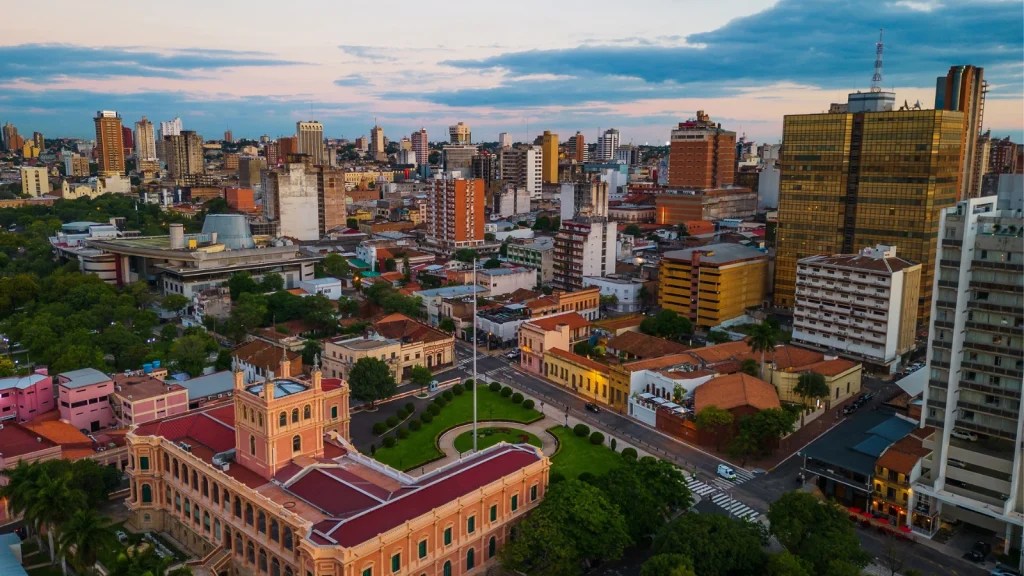
Paraguay, Uruguay and The Bahamas each apply a territorial tax system that limits taxation to income earned within their borders. For high‑net‑worth individuals, entrepreneurs and retirees, the choice of jurisdiction can dramatically affect the tax burden on foreign‑source earnings, residency costs, and required physical presence.
Paraguay – Low‑Cost Territorial Residency
- Tax regime – 8 %–10 % tax on Paraguay‑source income for individuals, 10 % for companies; foreign‑source income is not taxed. No wealth, inheritance or gift taxes.
- Residency investment – US $70,000 business investment (spread over ten years) plus creation of five formal jobs grants permanent residency through the SUACE investor portal.
- Residency requirements – After obtaining a national identity card (cédula) and taxpayer registration (RUC), tax residency is based on registration, not days present.
- Ongoing obligations – Monthly RUC filings are required even with zero income; missed filings incur fines that must be cleared before a residency certificate can be issued.
Uruguay – Premium Pricing with an 11‑Year Tax Holiday
- Tax regime – Territorial system; foreign passive income is exempt for the year residency is obtained and the following ten calendar years. After the holiday, foreign dividends and interest are taxed at a flat 12 % (foreign tax credits apply).
- Residency pathways
- Real‑estate route – Investment of roughly US $2 million (up from ~US $590 k in 2025) grants the tax holiday.
- Innovation Fund contribution – Approx. US $100 000 per year to the National Innovation Fund.
- Income‑based route – Proof of recurring monthly income of about US $2 500 and physical presence of more than 183 days per year.
- Other notes – The previous permanent 7 % flat‑rate election is being phased out for new residents.
The Bahamas – No Personal Income Tax
- Tax regime – No personal income tax, capital gains tax, inheritance tax or wealth tax. Consequently, foreign income is automatically untaxed.
- Residency tiers
- Economic Permanent Residency – US $1 million investment (real estate or Central Bank zero‑coupon bonds held ≥10 years); processing 8–12 months; lifelong status.
- Annual renewable permit – Lower financial threshold (approximately US $150 000); suitable for testing the jurisdiction.
- Physical‑presence rule – Minimum 90 days in The Bahamas per year and no more than 183 days in any other single country. Nassau is about a one‑hour flight from Miami, making the requirement feasible for many.
- Practical consideration – While a tax residency certificate with a taxpayer identification number can be obtained for Common Reporting Standard purposes, the process can be slower and less predictable than the statutory rules suggest; residents should rely on actual presence rather than the certificate alone.
Comparative Overview
| Factor | Paraguay | Uruguay | The Bahamas |
|---|---|---|---|
| Entry cost | ~US $70 k (business investment) | ~US $100 k/yr income route or US $2 m property for full tax holiday | ~US $150 k annual permit; US $1 m for permanent residency |
| Processing speed | Weeks | Months | Up to a year for permanent residency |
| Tax on foreign passive income | 0 % (territorial) | 0 % for 11 years, then 12 % | 0 % (no personal income tax) |
| Local income tax | 8 %–10 % | Territorial rates apply; after holiday foreign passive income taxed at 12 % | None |
| Ongoing compliance | Monthly RUC filings | Presence test (≥183 days) and annual reporting | Minimum 90 days presence; certificate acquisition may be delayed |
| Additional taxes | None | None | None |
Key Caveats
- Home‑country tax rules – Obtaining residency in any of these jurisdictions does not automatically exempt an individual from taxation in their original country. For example, German tax authorities consider the taxpayer’s habitual residence, not merely the location of assets. Similar rules apply in most European states and for U.S. citizens, who remain subject to worldwide income tax regardless of foreign residency.
- True relocation costs – Beyond the headline investment, genuine relocation entails housing, banking, and time spent on the ground, which can be substantial and must be factored into the overall strategy.
These three jurisdictions illustrate a spectrum of territorial tax options in the Americas, ranging from the low‑cost, quick‑process model of Paraguay to the premium, long‑term tax holiday of Uruguay and the outright zero‑tax environment of The Bahamas. Decision‑makers should weigh entry costs, residency timelines, compliance obligations, and the tax treatment of both local and foreign income against their personal and business objectives.
Source article: www.imidaily.com





