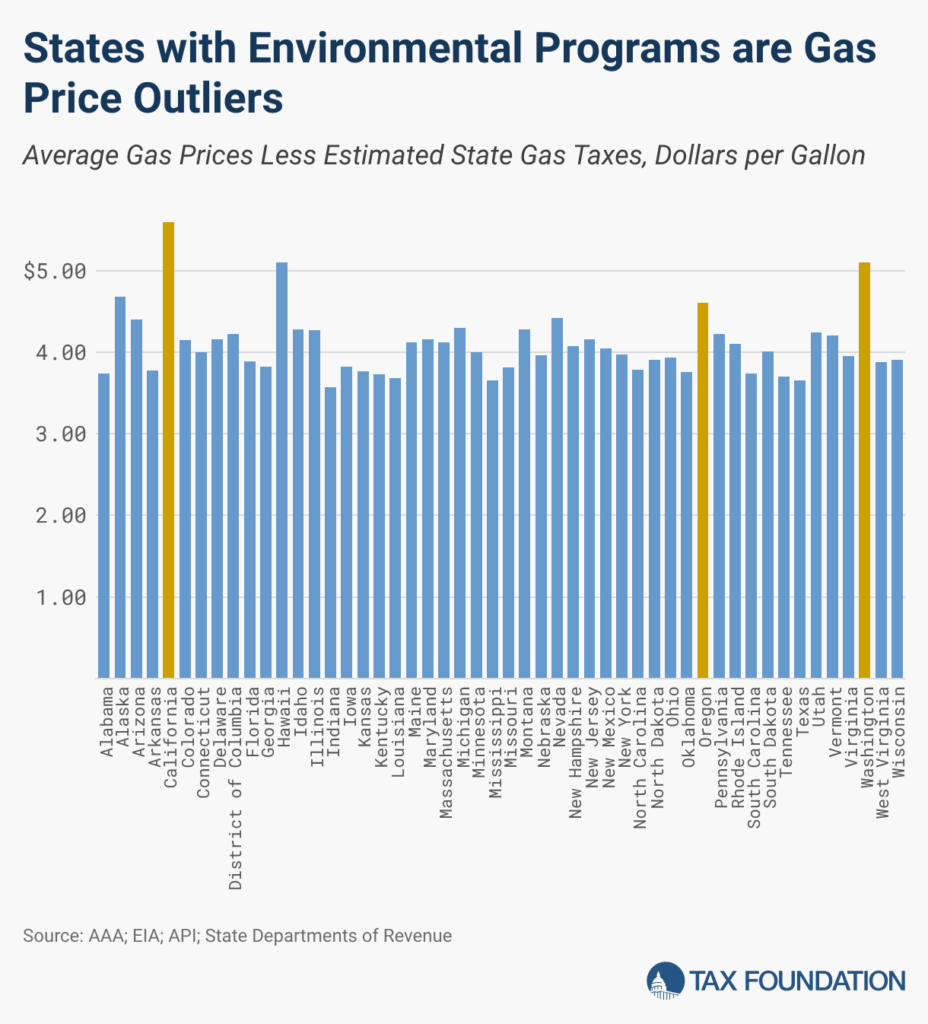
The 2026 data show notable shifts in state gasoline taxes, with several states raising rates by several cents per gallon (cpg) while a few reduced theirs. These changes affect rankings, local tax burdens, and the overall cost of fuel when combined with environmental programs.
Major State Tax Adjustments
- Indiana: Total increase of 8.6 cpg (license tax rise and a 7 % use tax on higher‑priced gasoline). Moves from 5th to 3rd highest state gas tax.
- Utah: Decrease of 6.6 cpg, dropping from 14th to 23rd rank.
- Michigan: Increase of 5.2 cpg; ranking unchanged.
- New Jersey: Rise of 4.2 cpg, moving to 7th highest.
- Illinois: Up 4 cpg, remaining the 2nd highest.
- Vermont: Up 3.5 cpg, climbing from 24th to 16th.
- Mississippi: Up 3 cpg, improving from 43rd to 38th.
- California: Increase of 2.7 cpg, staying the nation’s highest.
- Washington: Up 1.1 cpg, now 4th highest after being overtaken by Indiana.
- Colorado: Per‑gallon Road Usage Fee up 1 cpg, moving from 29th to 26th.
All other states changed their gas taxes by less than 1 cpg.
Local Gasoline Taxes
- Hawaii: County‑level taxes can add up to 24 cpg in Maui, exceeding the state excise tax.
- Nevada: Clark County imposes 39.8 cpg and Washoe County 67.8 cpg through local levies and the Regional Transportation Commission’s Fuel Revenue Indexing—both rates surpass many state totals.
Most states prohibit localities from imposing separate gasoline taxes, but the above examples illustrate how local taxes can substantially raise the pump price.
Gross‑Receipt Fuel Taxes
Some states tax fuel sales as a percentage of gross receipts rather than per‑gallon rates, making direct comparisons difficult. Connecticut’s Petroleum Products Gross Earnings Tax is 8.1 % on wholesalers, estimated by the state to equal roughly 20.9 cpg for diesel; gasoline rates are not provided.
Environmental Programs Adding to Pump Prices
Environmental policies—carbon taxes, cap‑and‑trade systems, low‑carbon fuel standards—are increasingly layered onto traditional excise taxes. Estimated impacts (cents per gallon) include:
-
California:
- Cap‑and‑trade adds ~23 cpg (Legislative Analyst’s Office).
- Low Carbon Fuel Standard (LCFS) projected to raise prices by 19–52 cpg (varying agency estimates).
- Combined state taxes and environmental costs total about $1.156 per gallon.
-
Washington:
- Clean Fuel Standard: 7.2 cpg.
- Cap‑and‑invest program: 5.2–15.5 cpg.
-
Oregon: Clean Fuels Program added ~9.35 cpg in 2025; the newer Climate Protection Program’s cost is not yet quantified but is expected to be higher.
-
New Mexico: Clean Transportation Fuel Program began in April 2026; while no direct pump fee exists, associated carbon credit costs will raise gasoline prices.
These programs, whether implemented as taxes, fees, or market‑based mechanisms, increase the effective cost of gasoline beyond statutory excise rates.
Contextual Factors
- Supply constraints: West Coast states face higher prices due to limited refining capacity and longer transportation routes.
- Geopolitical influences: Ongoing conflict with Iran has pushed national gasoline prices upward, amplifying the impact of state and local taxes.
- Gas tax holidays: Temporary suspensions of gasoline excise taxes have been shown to provide limited consumer relief while undermining roadway funding, especially when fuel supply is tight.
Funding Implications
The traditional per‑gallon gas tax is losing effectiveness as a road‑funding mechanism because:
- Vehicle efficiency gains and the rise of electric vehicles (which do not pay the gas tax) reduce revenue.
- Inflation erodes the real value of unindexed tax rates.
Many states are now imposing additional fees on electric‑vehicle owners to offset lost gas‑tax revenue. A growing number of jurisdictions are evaluating Vehicle Miles Traveled (VMT) taxes, which charge drivers per mile rather than per gallon, aiming for a more neutral and revenue‑stable system.
Key Takeaways for Drivers and Policymakers
- Expect higher pump prices in states with recent tax hikes (Indiana, Illinois, California) and in jurisdictions with substantial local levies (Nevada, Hawaii).
- Environmental program costs can add anywhere from ~7 cpg to over 50 cpg to gasoline prices, depending on the state and specific policy.
- Gas tax holidays provide only short‑term relief and may exacerbate funding gaps for road maintenance.
- Long‑term road‑funding strategies are shifting toward VMT taxes and EV fees to address declining gas‑tax revenues.
Understanding both statutory tax rates and the additional burdens from local and environmental policies is essential for assessing the true cost of gasoline in 2026.
Source article: taxfoundation.org




