The Trump administration has floated a $5,000 “dividend” for every adult U.S. citizen, contingent on Republicans retaining control of both chambers of Congress. The proposal, however, faces a stark fiscal gap between its cost and the revenue expected from the administration’s new tariffs.
Scale of the dividend
- Eligible population: Approximately 250 million adults who can vote.
- Total cost: 250 million × $5,000 ≈ $1.25 trillion for a single payment round.
- Budget context: The Congressional Budget Office projects a federal deficit of about $1.9 trillion for fiscal year 2027. Adding a $1 trillion‑plus dividend would push the deficit close to $3 trillion.
Tariff revenue outlook
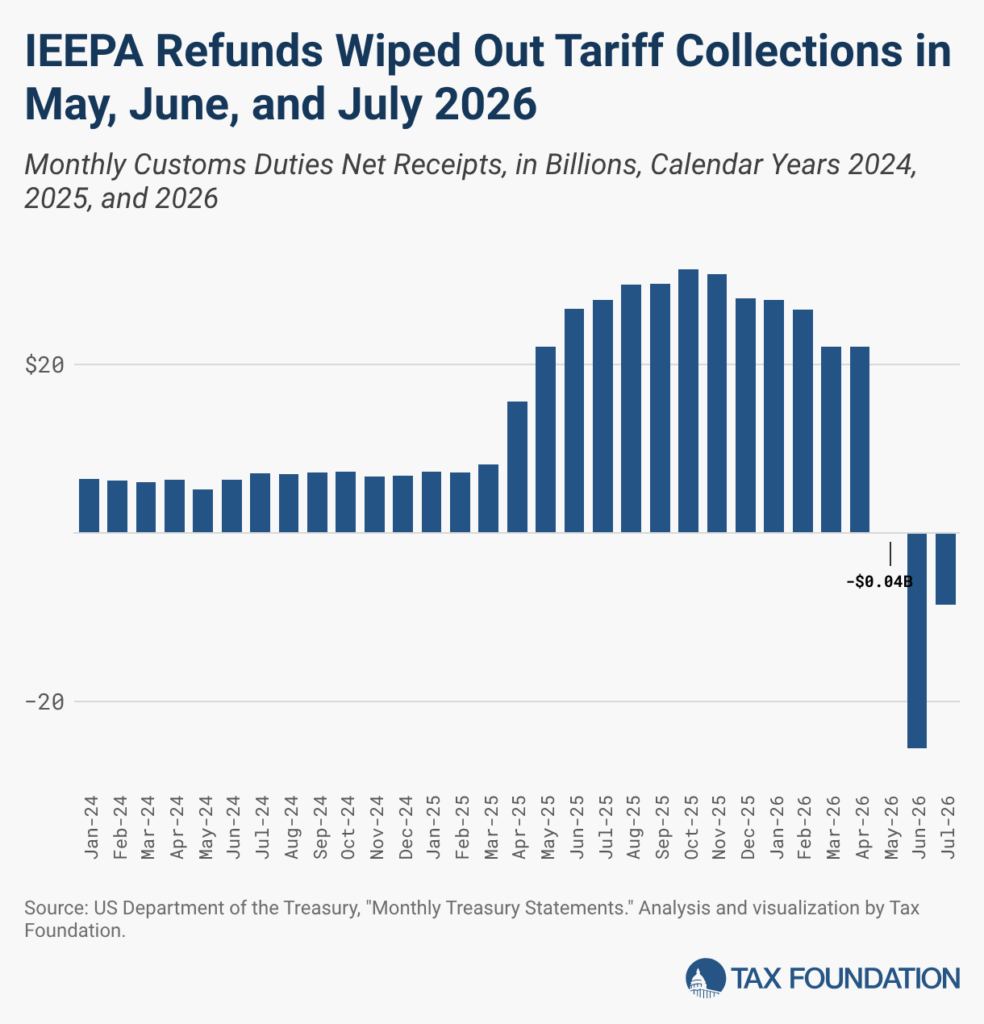
- Customs duties 2024: $79 billion.
- Customs duties 2025 (after new tariffs): $264 billion.
- Recent fluctuations: Collections have dipped and turned negative in some months as the Treasury refunded tariffs struck down by the Supreme Court.
The Tax Foundation estimates that the new tariffs will generate:
- Net revenue in 2027: $125 billion.
- Cumulative net revenue 2026‑2035: $1.4 trillion.
These figures are lower than the headline tariff collections because:
- Higher tariffs suppress imports, reducing the base for existing tariff revenues.
- Each dollar of tariff revenue diminishes other federal tax bases (e.g., income and payroll taxes).
Funding gap
- The $125 billion expected in 2027 covers about one‑tenth of the $1.25 trillion dividend cost.
- At current collection rates, it would take nearly a decade of tariff revenue to fully fund a single round of payments.
Policy considerations
- Income limits: Restricting payments by income could lower the total cost, but the program would still represent a large, deficit‑financed outlay.
- Inflation and interest rates: Financing the dividend through borrowing could elevate interest rates, add to inflationary pressures, and signal fiscal irresponsibility to markets.
- Economic impact of tariffs: The tariffs themselves raise prices for U.S. businesses and consumers and impose a burden on foreign exporters, while the net fiscal benefit is modest.
Bottom line
Even under optimistic revenue assumptions, the new tariffs would fund only a fraction of the proposed $5,000 dividend. Implementing the payment without substantial income targeting or alternative financing would exacerbate already large budget deficits and could undermine monetary stability. A more fiscally prudent approach would involve abandoning the tariff regime rather than using its limited revenue to finance a universal cash distribution.
Source article: taxfoundation.org




