Foreign investors seeking Panamanian permanent residency through the Qualified Investor Visa must consider not only the investment thresholds but also the solvency and track record of the developer whose project underpins their application. Since the October 2024 amendment to Executive Decree 193, pre‑construction purchases are allowed provided the developer posts a bank guarantee, making the developer’s reliability a critical component of the residency file.
Qualified Investor Visa basics
- Investment routes:
1. $500,000 in securities via a licensed Panamanian broker
2. $750,000 fixed‑term bank deposit
3. $300,000 real‑estate purchase (including pre‑construction units under the new decree) - Residency: Immediate permanent residency; citizenship eligibility after five years.
- Maintenance: The qualifying investment must be retained for the full five‑year period.
Impact of the developer guarantee
The decree requires developers selling units still under construction to provide a bank guarantee. If a project stalls, the investor risks both the capital outlay and the residency certification that depends on the property’s completion.
Market context
- Approval statistics: 327 Qualified Investor approvals in both 2024 and 2025 (up from 187 in 2023); 96 % approval rate in the first half of 2026 despite a slowdown to 100 approvals.
- Economic backdrop: Panama’s GDP grew 4.4 % in 2025, with IMF forecasts of ~4 % annual growth through 2027. Construction output rose 2.7 % in the same period, creating a supply lag that attracts new developers faster than projects are finished.
Assessing developer credibility
Key criteria for evaluating a developer include:
- Number of units delivered and projects completed across full market cycles.
- Resale performance of completed communities.
- Presence of diversified portfolios (city, beach, island projects) that demonstrate capability across different development environments.
Grupo Los Pueblos (GLP) – a four‑decade case study
- History: Founded in 1985 by the Alemán family; over 26,000 units delivered to date.
- 2025 milestone: Celebrated its 40th anniversary with 16 new projects under development.
- Signature projects:
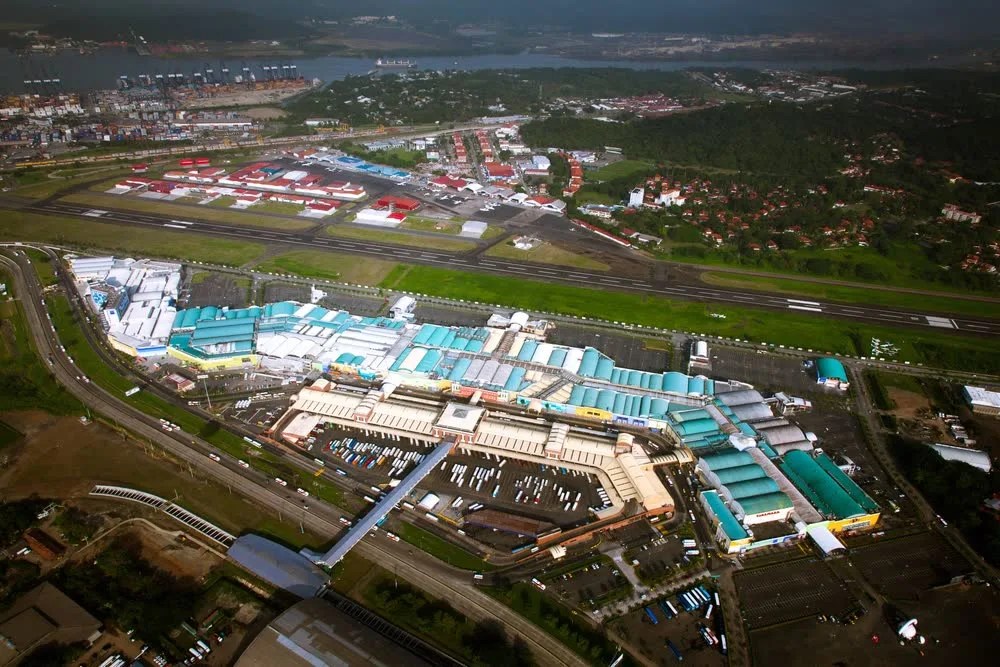
- Albrook Mall (opened 1998) – one of the largest shopping centers in the Americas, adjacent to the Gran Terminal de Transporte (100,000+ daily passengers).
- Santa María Golf & Country Club (2014) – an 18‑hole course anchoring a luxury residential enclave.
Island development – Ocean Reef
- Completed 2018; 19 ha of man‑made land in the Bay of Panama, the first inhabited residential islands of this type in Latin America.
- Limited lot supply creates inherent scarcity; the project’s complexity serves as a credibility marker for the developer.
Urban projects – Bosco di Santa María
- Flagship tower launched in GLP’s anniversary year within the established Santa María master plan.
- The surrounding community has been occupied for over a decade, allowing prospective buyers to evaluate neighborhood quality before purchase.
- Target market includes investors seeking rental yields, a permanent base, or a golf‑course address.
Beach development – Playa Caracol (Chame)
- Located 1 hour 20 minutes from Panama City; over 1 km of white‑sand Pacific beach with views of Cerro Chame.
- Gated community (Vento Beach Club) offers restaurants, gym, surf school, pools, sports courts, pet parks, and an on‑site market.
- “The Tides” townhouse phase comprises 62 two‑level homes (81 m²) positioned ~80 m from the water; additional apartments cater to varied price points for permanent residence or vacation rentals.
Tourism trends supporting rental demand
- 2025: Panama Tourism Authority recorded 3,004,266 international visitors and $6.6 billion in tourism earnings (up 9.7 % YoY).
- First half 2026: 1.75 million arrivals, breaking the previous record; average hotel occupancy 67.6 %.
These figures underline the potential for short‑term rental income in coastal projects such as Playa Caracol.
Practical takeaways for investors
- Verify a developer’s completed portfolio in person or through public records before committing funds.
- Prioritize developers with a long history of finished, occupied projects, as these can be inspected directly.
- Ensure the developer can provide the required bank guarantee under Executive Decree 193 to protect the residency‑linked investment.
- Align the type of property (city, beach, island) with personal residency goals—whether for rental yield, a permanent base, or a lifestyle address.
Choosing a proven developer like Grupo Los Pueblos, whose work spans urban, coastal, and island environments and is demonstrably completed, reduces the risk of project delays that could jeopardize both the investment and the residency status.
Source article: www.imidaily.com



