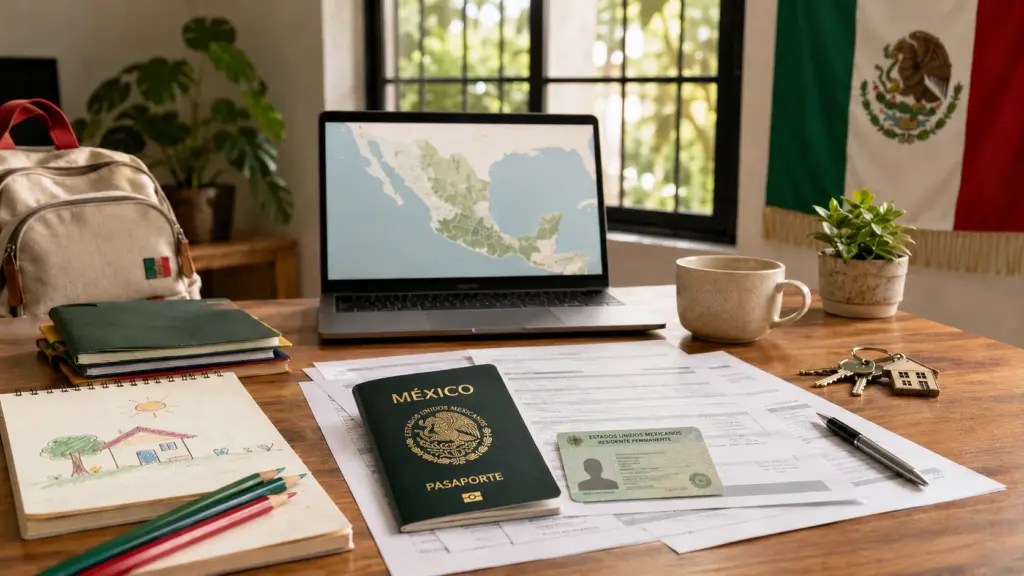
How to Live in Mexico and Get a Mexican Passport
Mexico is one of the most attractive countries in the world for people who want a long-term base, a better lifestyle, and eventually a second passport. The path is not instant, but it is clear: first become a legal resident, live in Mexico, maintain your status, and then apply for Mexican citizenship through naturalization.
For many people, the journey starts with temporary residence, permanent residence, or a family connection inside Mexico. After enough time as a resident, and with enough physical presence in the country, it may be possible to apply for a Mexican passport as a naturalized citizen.
Step 1: Move to Mexico Legally
The first step is getting the right immigration status. Most people begin with one of three routes:
- temporary residence
- permanent residence
- family-based residence through a Mexican spouse or child
The best route depends on your nationality, financial situation, family circumstances, and long-term plans.
Temporary Residence: A Renewable Path to Living in Mexico
Temporary residence is one of the most common ways to start a long-term life in Mexico.
This status is usually granted to people who qualify through financial solvency, employment, family links, or other recognized categories. It allows you to live in Mexico legally, but it is not permanent. A temporary resident card must be renewed, normally once per year at first, until you qualify for a longer renewal period, permanent residence, or another status.
Temporary residence can be a good option if you want to begin building legal residence time toward citizenship but do not yet qualify for permanent residence.
Permanent Residence: The Preferred Long-Term Option
Permanent residence is usually the more desirable status when you can qualify for it.
Unlike temporary residence, permanent residence is generally indefinite. It is not something you need to renew every year in the same way as temporary residence, which makes it much more convenient for people who want Mexico to become their long-term home.
Permanent residence can also provide a more stable foundation for building the residence time needed for citizenship. For families, retirees, people with strong financial solvency, or those who already know they want to live in Mexico permanently, it is often worth trying to qualify for permanent residence from the beginning.
However, one important detail is often overlooked: the requirements can vary wildly depending on where you apply.
Mexican embassies and consulates do not always publish or apply the financial criteria in exactly the same way. Some missions may list permanent residence only for retirees or pensioners. Others may publish local-currency savings or pension thresholds. Some may require proof of official retirement age, while others may not clearly state an age cutoff. Some consulates publish detailed checklists, while others ask applicants to email for current requirements.
Because of this, anyone applying from outside Mexico should compare the requirements at every Mexican embassy or consulate where they are eligible to apply. Do not assume that one consulate’s financial threshold, age rule, or document checklist will match another. The best location to apply may depend on your nationality, legal residence, current location, income, savings, retirement status, and family circumstances.
Family Routes: Spouse or Child in Mexico
Some people become residents through family connections in Mexico.
For example, if you have a Mexican spouse or a Mexican child, you may be able to apply for residence through family unity. In some cases, a person may enter Mexico as a tourist and then change status through INM, the Instituto Nacional de Migración, once they have a qualifying family relationship.
This is especially relevant for families who have a baby in Mexico or where one spouse is Mexican. The process is handled through INM, using the official immigration procedures listed on the INM tramites portal.
Step 2: Build Residence Time Toward Citizenship
Getting a resident card is only the beginning. To eventually get a Mexican passport, you must first become a Mexican citizen through naturalization.
For most people, the standard requirement is at least 5 years of legal residence in Mexico.
This means holding valid temporary or permanent resident status and maintaining that status properly. Temporary residents must renew their cards when required. Permanent residents must keep their documentation valid and current.
The Standard Route: 5 Years of Residence
Most foreign residents can apply for Mexican citizenship after 5 years of legal residence.
This route is for people who do not qualify for a shorter naturalization period. The 5 years must be supported by valid Mexican residence documentation, usually a temporary or permanent resident card.
It is important to avoid gaps in residence status. If your card expires or you fail to renew properly, it may affect your ability to prove continuous legal residence.
The Faster Route: 2 Years of Residence
Some people may qualify for naturalization after only 2 years of residence.
This shorter route may apply to:
- nationals of Latin American countries
- nationals of countries of the Iberian Peninsula
- people married to a Mexican citizen
- people with a Mexican child
- certain other family or special legal categories
For these applicants, Mexico offers a shorter route because of cultural, family, or legal ties to the country.
Step 3: Spend Enough Time Physically in Mexico
Residence status alone is not enough. You also need to show that you actually live in Mexico.
A key rule is your physical presence during the 2 years immediately before applying for citizenship. In practical terms, you should have spent at least 18 months in Mexico during the last 2 years.
That means your absences from Mexico during that final 2-year period should generally not exceed 6 months in total.
This is one of the most important planning points for anyone who wants a Mexican passport. If you travel frequently, you should track every exit and entry carefully.
Step 4: Apply for Mexican Citizenship Through SRE
Immigration status is handled by INM, but citizenship is handled by SRE, the Secretaría de Relaciones Exteriores.
Once you have the required residence period and meet the physical presence requirement, you can apply for a Carta de Naturalización through SRE.
The process begins with SRE’s naturalization appointment system. Applicants must complete the pre-registration process, obtain the DNN-3 naturalization application form, select the correct office or service module, and attend an appointment with the required documents.
Documents You May Need
The exact documents depend on your naturalization category, but applicants should generally expect to prepare:
- valid temporary or permanent resident card
- completed DNN-3 naturalization application
- passport and copies
- birth certificate
- apostille or legalization for foreign documents
- certified Spanish translation if documents are not in Spanish
- proof of legal residence in Mexico
- sworn declaration of entries and exits from Mexico during the previous 2 years
- federal criminal-record certificate
- local criminal-record certificate from your state of residence
- evidence of Spanish ability and knowledge of Mexican history and culture, unless exempt
Because document requirements can vary depending on your case, you should check the current SRE instructions before applying.
Exams and Integration
Naturalization is not just a paperwork process. In many cases, applicants must show that they speak Spanish and understand Mexican history and culture.
SRE may apply exams or evaluations during the process. Some applicants may be exempt from certain exams depending on age or category, but they may still need to prove Spanish ability.
This reflects the purpose of naturalization: Mexico wants to see that the applicant has genuinely integrated into Mexican life.
From Resident to Mexican Passport
Once your naturalization is approved, you receive a Carta de Naturalización. After becoming a Mexican citizen, you can apply for a Mexican passport.
The overall path usually looks like this:
- Move to Mexico legally.
- Obtain temporary or permanent residence.
- Renew temporary residence if required.
- Maintain valid legal residence.
- Spend enough time physically in Mexico.
- Apply for naturalization through SRE after 5 years, or after 2 years if you qualify for a reduced route.
- Complete the document review and exams if required.
- Receive your Carta de Naturalización.
- Apply for a Mexican passport as a Mexican citizen.
Why Planning Matters
The biggest mistake is assuming that living in Mexico casually is enough. It is not.
To get a Mexican passport, you need to build a documented legal path. That means getting the right residence status, keeping it valid, tracking your time in and out of Mexico, and preparing your naturalization documents carefully.
If your goal is Mexican citizenship, start organizing from the beginning. Keep copies of your resident cards, passports, entry and exit records, proof of address, school records for children, tax records if relevant, and any documents showing that Mexico is truly your home.
It is also worth researching consulates carefully before applying for residence. The difference between getting temporary residence and permanent residence can be significant, and permanent residence is often the better target if you qualify. Since consular criteria can differ widely, comparing multiple embassies and consulates may help you find the clearest and most suitable route.
Final Takeaway
The path to a Mexican passport is realistic, but it requires planning.
For most people, the route is 5 years of legal residence followed by naturalization through SRE. For Latin American nationals, people from the Iberian Peninsula, people married to a Mexican citizen, or people with Mexican children, the route may be shortened to 2 years.
Temporary residence can start the journey, but permanent residence is usually preferable because it is indefinite and avoids yearly renewals. Family routes can make it easier to regularize status inside Mexico.
The key is to live in Mexico legally, maintain your residence, spend enough time in the country, research the right consulate before applying, and use the correct SRE naturalization process when eligible.