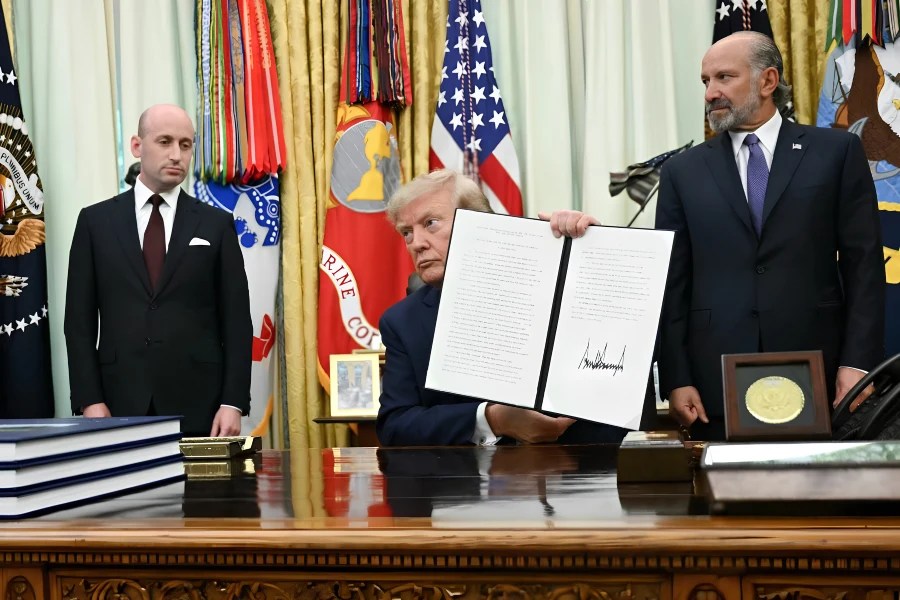
President Donald Trump signed two executive orders on August 6, 2026, aimed at narrowing the scope of birthright citizenship and tightening enforcement against “birth tourism.” The orders follow the Supreme Court’s June 30, 2026 decision in Trump v. Barbara, which struck down a 2025 executive order that attempted to deny citizenship to children of undocumented or temporary‑visa parents.
First order – “Continuing to Protect the Meaning and Value of American Citizenship”
The order directs federal agencies to refuse or withdraw any document that recognizes a person as a U.S. citizen when neither parent is a citizen and one of four conditions applies:
- Alien enemies – either parent is classified as an “alien enemy,” including members of foreign terrorist organizations or individuals designated as specially designated global terrorists.
- Foreign government employees – either parent works for a foreign government, such as an ambassador, embassy or consulate employee, or an employee of an international organization who enjoys diplomatic immunity.
- Commercial birth arrangements or fraud – either parent engaged in a commercial transaction intended to secure U.S. citizenship for the child, or participated in a surrogate‑birth arrangement located in the United States or its territories.
- Births in certain U.S. territories or territorial waters – children born in a U.S. territory or territorial waters where Congress has not expressly granted citizenship.
Surrogacy provision
The inclusion of commercial surrogacy raises novel legal questions. The order does not specify how authorities will differentiate ordinary international surrogacy from arrangements designed primarily to obtain U.S. citizenship, nor does it clarify whether genetic ties, parents’ nationality, or immigration intent will be considered. Legal scholars note that the Fourteenth Amendment and existing Supreme Court precedent do not address surrogacy, suggesting potential litigation.
Second order – “Ending Birth Tourism”
This order defines birth tourism as a foreign national entering the United States on a non‑immigrant visa solely to give birth on U.S. soil, and also covers individuals who facilitate such entry. It authorizes the Secretaries of State and Homeland Security to issue rules and operational policies, including:
- Refusing or revoking visas and other travel authorizations.
- Denying entry at ports of entry.
- Removing or permanently barring individuals who have engaged or intend to engage in birth tourism.
- Taking action against businesses or organizations that facilitate birth tourism, domestically or abroad.
Exemptions may be granted on humanitarian grounds or when entry serves the national interest. The measure builds on a 2020 visa rule that already barred B‑visitor visas for primary birth‑tourism purposes, but now couples immigration enforcement with an attempt to prevent recognition of citizenship in the targeted cases.
Implementation timeline
Both orders require the Department of State, Department of Justice, Department of Homeland Security, Social Security Administration, and other agencies to publish implementation guidance within 30 days of August 6, 2026. The guidance is expected to detail:
- Criteria for identifying affected cases.
- Evidence parents must provide.
- Effects on passports, Social Security records, and other citizenship documents.
- Procedures for assessing commercial surrogacy, foreign‑government employment, alleged fraud, and connections to designated terrorist organizations.
Expected legal challenges
- Second order (birth tourism) – Likely to withstand legal scrutiny because the executive branch has long‑standing authority over visa issuance and admission. Challenges would focus on alleged misrepresentation of travel purpose.
- First order (birthright citizenship) – Raises constitutional questions about whether the president can expand the narrow exceptions to the Citizenship Clause of the Fourteenth Amendment. Courts may need to decide if parental status, employment, affiliations, fraud, or commercial arrangements can lawfully affect a child’s citizenship.
At present, neither order eliminates birthright citizenship. Their practical impact will depend on the forthcoming agency guidance and the outcomes of anticipated lawsuits.
Source article: outboundinvestment.com




