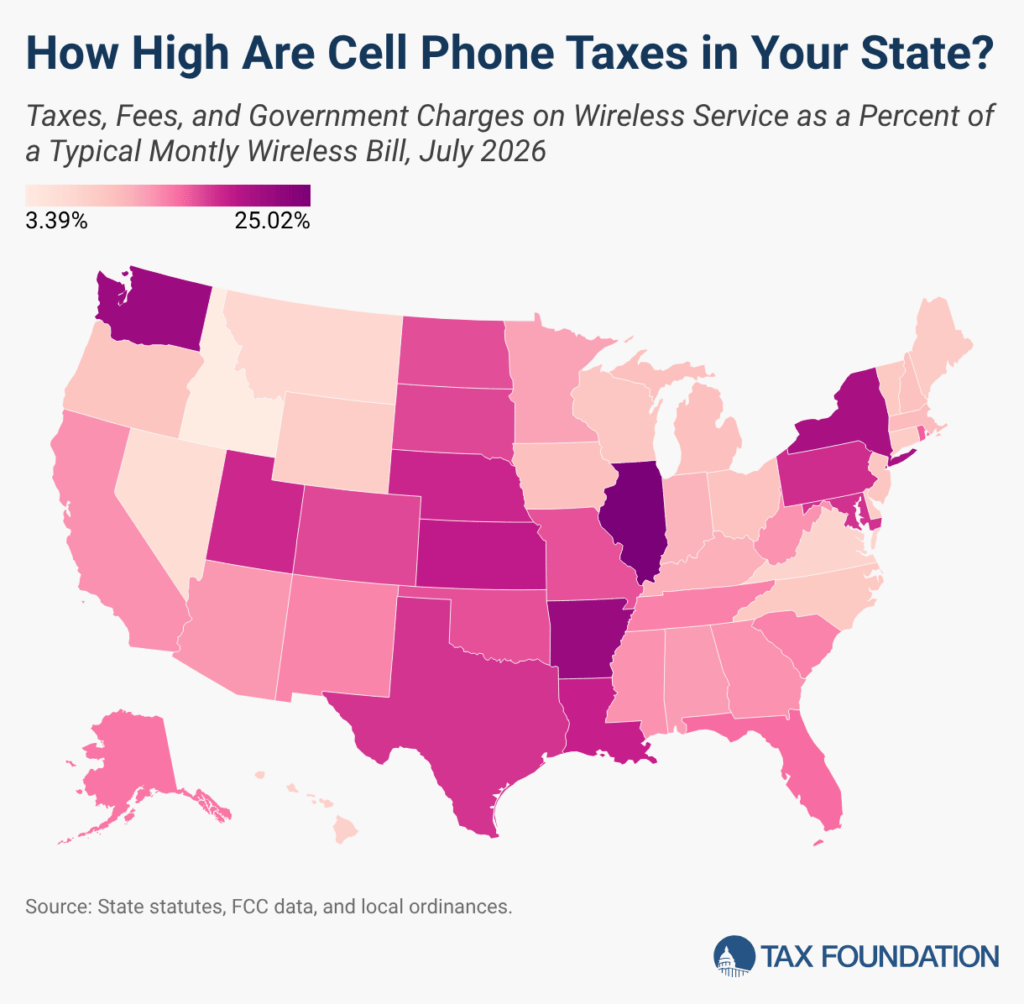
Wireless taxes and fees are set to rise again in 2026, pushing the average household’s annual cost for a four‑line shared plan from $330 to about $345. The increase follows a federal Universal Service Fund (FUSF) surcharge hike and modest growth in state and local levies.
2026 Tax Burden Overview
- A typical household paying $100 per month for taxable wireless service will face $345 in taxes, fees, and surcharges per year in 2026.
- The state and local tax burden rose from 14.25 % to 14.42 % of the monthly bill.
- The FUSF surcharge increased from 13.26 % to 14.39 %, driving the overall tax share to a record 28.8 % of a wireless bill.
National Impact
- Approximately 600 million wireless connections exist in the United States.
- Total taxes paid to state and local governments in 2026 are projected at $11.4 billion, broken down as:
- $4.6 billion in sales taxes and other non‑discriminatory consumption taxes.
- $4.2 billion in 911 and 988 emergency‑service fees (including funds not always used for 911 purposes).
- $2.5 billion in telecommunications‑specific taxes.
State‑by‑State Tax Rates
- Highest rates (state + local):
- Illinois – over 25.0 %
- Arkansas – 22.0 %
- Washington – 21.9 %
- Lowest rates:
- Idaho – 3.4 %
- Nevada – 6.1 %
- Montana – 7.1 %
Key Tax and Fee Components
- 911 fees: Most states impose a flat per‑line charge to fund emergency systems; amounts vary widely (e.g., Chicago charges $5.00 per line per month, while many Missouri counties charge nothing).
- 988 crisis‑hotline fees: Authorized by Congress in 2021, these fund state‑run suicide‑prevention hotlines. Virginia was the first to impose a $0.12 per line per month fee; ten additional states have followed.
- State Universal Service Fund (SUSF): Nearly half of the states levy a SUSF charge, either as a percentage of intrastate revenue or as a per‑line fee. Recent shifts to per‑line charges increase the burden on multi‑line plans.
- Additional wireless‑specific taxes: Thirteen states impose taxes that are either supplemental to sales taxes or replace them at higher rates. Maine repealed its Service Provider Tax in 2025.
Policy Considerations
- Regressivity: Wireless taxes disproportionately affect low‑income households, many of whom rely on wireless service as their sole means of communication.
- Investment impact: Targeted taxes on wireless services lack the traditional justifications for excise taxes (user‑pays or internalizing social costs) and may deter investment in network infrastructure, which underpins productivity across sectors such as transportation, health care, energy, and education.
- Internet Tax Freedom Act: This federal law bars state and local taxes on internet access, including wireless internet. Without it, similar excise rates could be applied to broadband, raising overall consumer tax burdens.
The data illustrate a continuing trend: while average monthly revenue per wireless line has fallen from $50.64 (two decades ago) to $33.14 today, tax and fee percentages have climbed from 16.2 % to 28.8 %, offsetting much of the price decline for consumers.
Source article: taxfoundation.org


