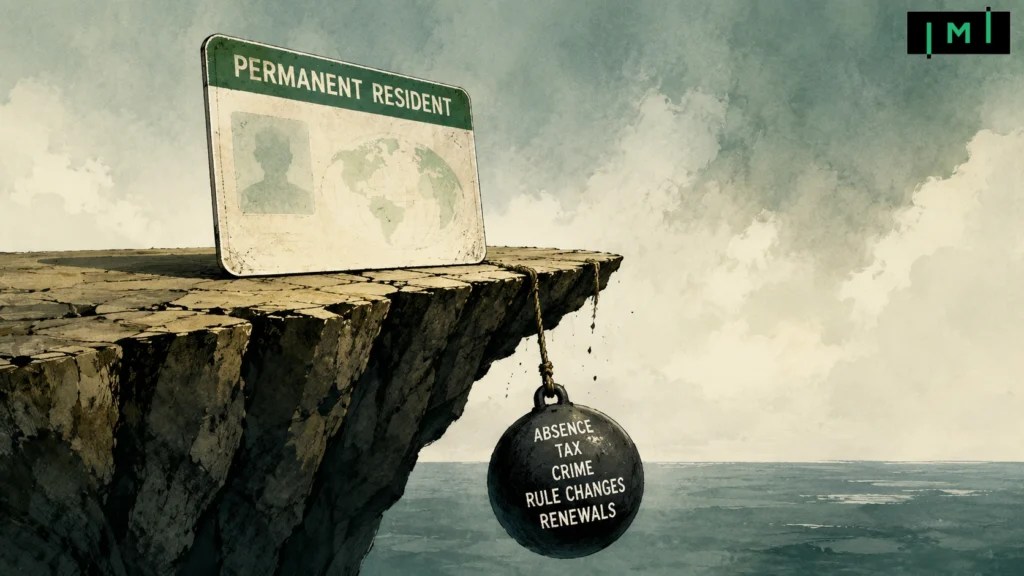
Permanent residence is not an unconditional right to stay forever; most jurisdictions impose absence limits, renewal rules, or other conditions that can cause the permit to lapse.
- EU long‑term residence: loses status after 12 consecutive months outside the EU (a single day inside resets the clock).
- US green card: 1 year abroad creates a presumption of abandonment; absences over 180 days may trigger a return‑resident interview.
- UK indefinite leave to remain: lapses automatically after >2 continuous years abroad.
- EU Settlement Scheme (settled status): valid for 5 years; thereafter a Returning Resident visa is needed.
- Canada: requires ≥730 days physical presence in each 5‑year period.
- Australia: travel facility expires after 5 years; a Resident Return Visa needs ≥2 years residence in the prior 5 years.
- Golden‑visa programs (e.g., Portugal): 7 days stay in year 1, 14 days in each subsequent 2‑year period; some have no stay requirement.
- Singapore PR: must hold a valid Re‑Entry Permit; leaving without one loses status (180‑day window from Dec 2025).
- NZ and Mexico: permanent resident visas have no expiry, no minimum stay, and allow unrestricted re‑entry.
- Criminal conduct can lead to removal in the US, Singapore, and other countries, regardless of duration.
- Physical presence that meets immigration rules can also trigger tax residency (e.g., Spain 183 days, some jurisdictions 45 days).
- Program rules may change after approval (e.g., UAE revoked golden‑visa for Iranians abroad).
Main risk: loss of status due to prolonged absence, failure to renew cards or travel permits, sale of qualifying investments, criminal convictions, or legislative changes.
Practical implication: track allowed days abroad, keep residence cards and re‑entry documents up‑to‑date, retain required investments, monitor tax residency thresholds, and stay informed of rule amendments.
Takeaway: Treat “permanent” residence as conditional—manage absences, documentation, and compliance to preserve the right to stay.
Source article: imidaily.com


