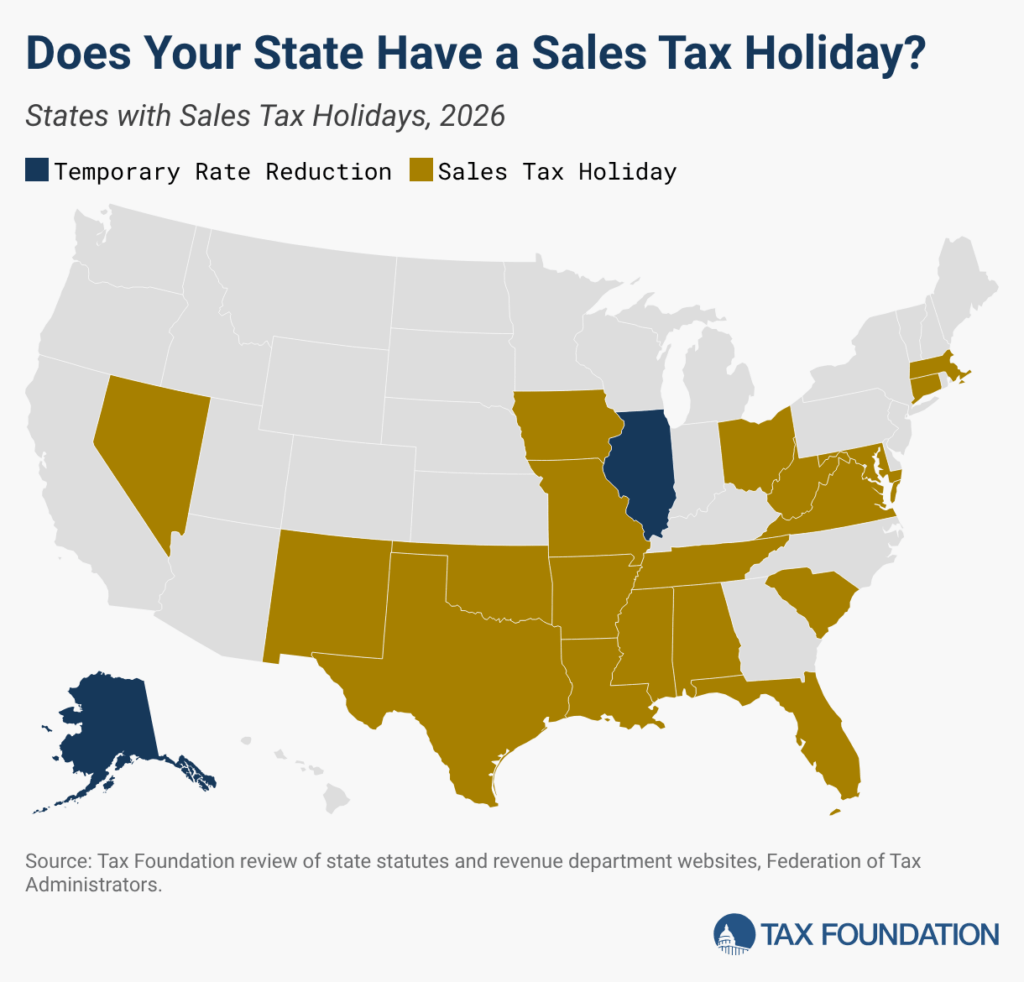
Sales tax holidays—designated periods when selected goods are exempt from state (and sometimes local) sales taxes—remain a common policy tool, with 20 states planning holidays in 2026, up from 19 the previous year. Illinois reinstated a back‑to‑school holiday, and Alabama introduced a new holiday, accounting for the increase. One municipality in Alaska also offers a local holiday, but it is not included in the state count.
Scope and Typical Exemptions
- Goods commonly exempted: back‑to‑school supplies, clothing, computers, hurricane‑prep items, and energy‑efficient appliances.
- States targeting appliances: Maryland, Missouri, Texas, and Virginia focus on energy‑efficient models.
- Clothing exemptions: many states include apparel in their holiday lists.
Recent Legislative Changes
- Illinois: Public Act 104‑0468, signed June 16 2026, restores a back‑to‑school holiday from August 7 through August 16 2026. During this period the state’s 6.25 % sales tax on qualifying items drops to 1.25 %.
- Alabama: Added a new sales‑tax holiday in 2026 (specific dates and qualifying items not detailed in the source).
- Nevada National Guard: Offers a holiday where eligible Guard members and relatives must apply 45 days in advance, pay tax upfront, and later request a refund from the Department of Taxation. This shifts the compliance burden to consumers.
Economic Impact and Critiques
- Revenue effects: Holidays shift the timing of purchases rather than increase overall demand, leading to reduced state and local tax collections with limited economic benefit.
- Consumer behavior: Studies show much of the extra shopping would have occurred anyway, merely moved to the tax‑free window. Impulse purchases generated during holidays are insufficient to offset revenue losses.
- Price caps: Caps on qualifying item prices can push consumers toward lower‑quality, cheaper products and disadvantage small businesses whose prices may exceed the thresholds.
- Compliance burdens:
- Retailers must adjust cash‑register settings, verify product eligibility, and manage short‑notice changes.
- Small businesses face staffing challenges and revenue timing distortions before and after holidays.
- Online sellers must track evolving state rules, risking over‑collection penalties.
- Effect on low‑income families: Delaying purchases to wait for a holiday can force families to buy when stock is limited, potentially at higher prices. Retailers may absorb up to 20 % of the intended benefit through price increases, reducing savings for the lowest‑income shoppers.
- Out‑of‑state shoppers: With many states offering similar holidays, the ability to attract non‑resident consumers is minimal. Moreover, out‑of‑state purchases used in the home state remain subject to use tax.
Structural Concerns
- The prevalence of holidays suggests underlying weaknesses in state tax codes; policymakers often acknowledge that the regular sales tax suppresses economic activity for most of the year.
- Offsetting holiday revenue losses typically requires raising other taxes that are more distortionary than sales taxes.
- The selection of exempted goods can be politically driven, favoring certain industries or consumer groups.
Trends
- Some states have abandoned sales‑tax holidays after recognizing their limited benefits and administrative costs, yet the practice persists because of its political appeal.
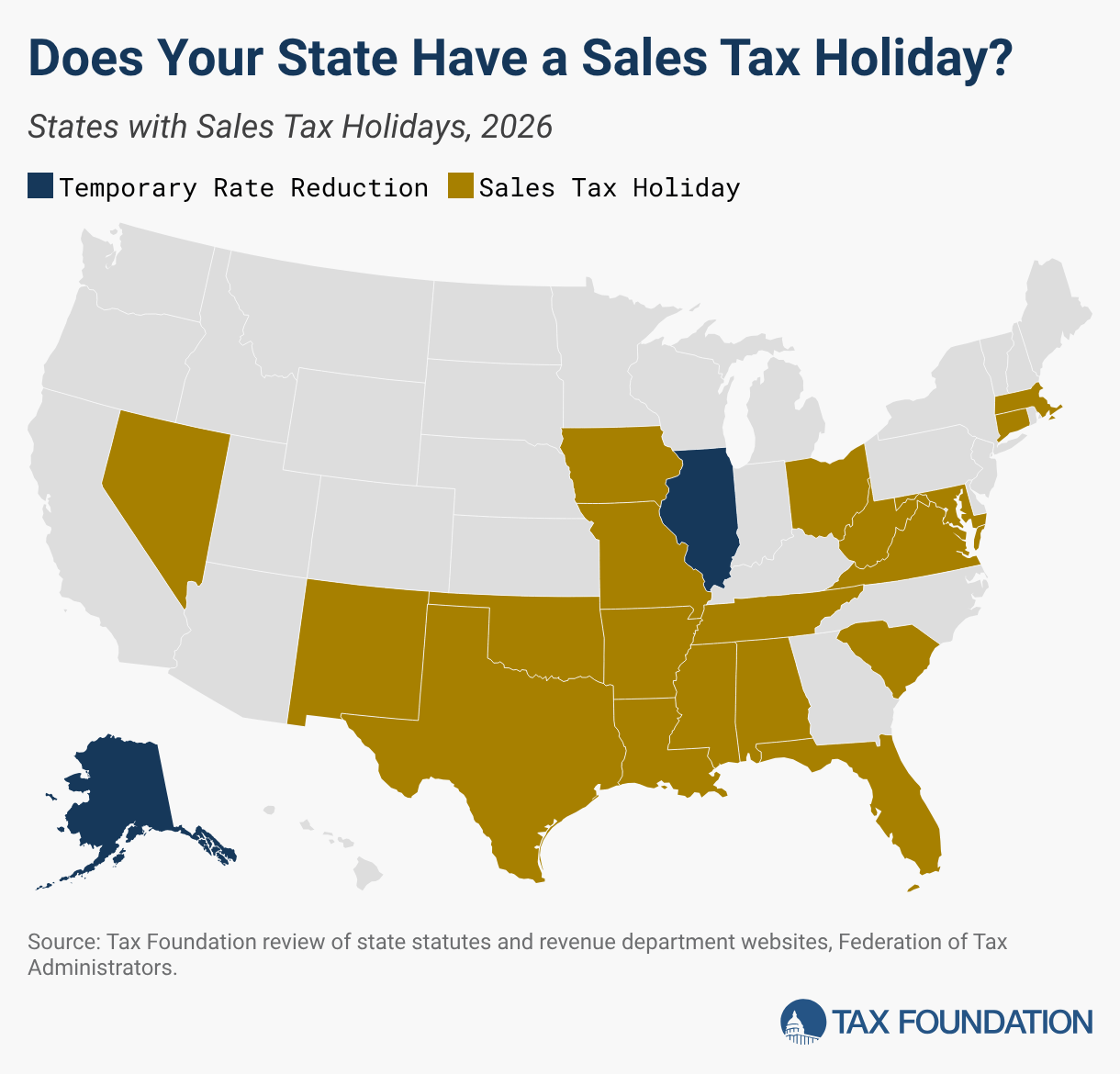
- The map below visualizes which states have holidays in 2026.
Source article: taxfoundation.org


