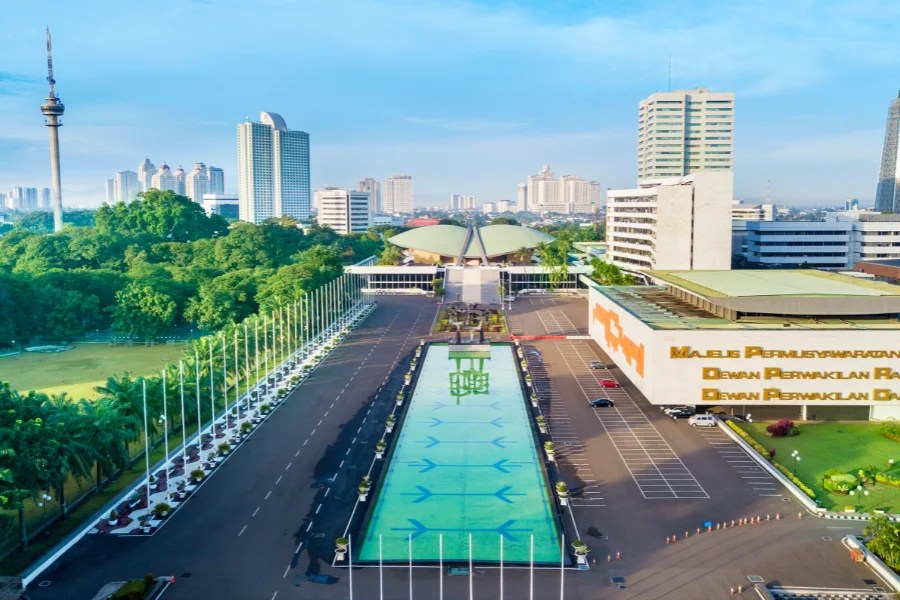
Indonesia’s parliament has approved the Indonesia International Financial Center (PFII), a new specialized financial zone that will operate alongside the country’s existing system and offer extensive tax, immigration and regulatory incentives to attract global capital and financial‑services firms.
Scope and Target Activities
The PFII is designed to draw international banks, investment managers, insurers, family offices, fintech firms, capital‑market participants, commodity traders and professional service providers. Permitted activities include:
- Banking, insurance and Islamic finance
- Capital‑market services, venture capital, asset and trust management
- Bullion, commodity and foreign‑exchange trading, money‑market transactions
- Financial‑technology services and other supporting financial activities
- Legal, accounting, notary, appraisal and consultancy services (subject to licensing)
The centre aims not only at overseas markets but also at expanding financing for Indonesia’s real economy, infrastructure, strategic projects, sustainable development and climate‑related investments.
Location and Development Timeline
- Permanent site: Kura Kura Bali Special Economic Zone, designated by Coordinating Minister for Economic Affairs Airlangga Hartarto and Investment Minister Rosan Roeslani.
- Interim operations: Danareksa building in Jakarta, beginning immediately after the July 21 2026 parliamentary approval.
- Construction: Expected to take 2–3 years before the permanent Bali campus becomes operational.
Tax Incentives
The PFII law introduces several tax benefits intended to make the hub competitive with regional centres such as Singapore and Dubai:
| Incentive | Scope | Potential Duration |
|---|---|---|
| Corporate income tax | 100 % reduction for qualifying businesses conducting approved activities within the PFII | Up to 50 years (exact period to be set by implementing regulations) |
| Personal income tax | 100 % reduction for certain foreign experts employed in the financial‑services sector | Same as corporate relief, subject to regulations |
| Withholding tax | Relief on qualifying PFII investment income received by non‑resident taxpayers | – |
| VAT & luxury‑goods tax | Preferential treatment for specified strategic goods and services | – |
| Customs facilities | Simplified procedures for eligible transactions | – |
Eligibility, compliance requirements and the exact length of relief will be defined in subsequent regulations. The PFII will still be subject to international tax standards, including the 15 % Global Minimum Tax where applicable.
Golden Visa Interaction
Indonesia’s broader Golden Visa program grants long‑term residence to qualifying foreign investors, executives, high‑net‑worth individuals and certain professionals. Within the PFII framework:
- Golden Visa holders are excluded from Indonesian domestic tax‑subject status for the duration of their visa only if the visa is obtained through the PFII.
- This does not constitute a blanket “0 % tax” for all Golden Visa holders.
- Indonesian‑source income, transactions outside the PFII‑protected scope, and withholding obligations may still generate tax liabilities.
- Detailed implementing rules will determine the precise qualifications and the interaction with other tax provisions.
Governance and Dispute Resolution
The law creates a dedicated governing body to manage the PFII, with specialized supervision coordinated with existing Indonesian financial authorities. It also establishes:
- Dedicated arbitration mechanisms and a specialized court for disputes arising from PFII activities.
- Permission to use foreign currencies for qualifying transactions, subject to regulatory limits.
Investment Potential
The Ministry of Finance estimates the PFII could attract IDR 300–500 trillion (approximately US $16.6–27.7 billion) in investment. This figure is an initial projection, not a committed amount, and will depend on the centre’s ability to compete with established hubs.
Potential sources of investment include:
- Foreign banks opening branches
- International corporations establishing regional operations
- Asset managers administering capital from the zone
- Investors using the PFII as a base for broader Southeast Asian activities
The centre is also expected to channel longer‑term financing toward infrastructure, strategic national projects and climate‑related initiatives.
Implementation Challenges
While parliamentary approval provides a legal foundation, the PFII’s attractiveness will hinge on forthcoming regulations covering:
- Licensing procedures and eligibility criteria
- Detailed tax‑incentive conditions and compliance monitoring
- Governance, supervision and anti‑money‑laundering frameworks
- Consistency and predictability of dispute‑resolution mechanisms
International investors will assess not only the tax benefits but also the credibility of regulatory institutions, the stability of the legal environment, and the effectiveness of supervision against financial crime.
Key Takeaways for Investors
- The PFII offers potentially extensive tax relief for qualifying businesses and certain foreign professionals, but benefits are contingent on detailed rules yet to be issued.
- Golden Visa holders may obtain tax‑exempt status only when the visa is linked to PFII activities, and other Indonesian tax obligations may still apply.
- The permanent hub will be located in Kura Kura Bali, with interim operations in Jakarta and a 2–3‑year development window.
- Expected investment inflows are up to US $27.7 billion, subject to the centre’s ability to compete with Singapore, Dubai and other regional financial centres.
Investors considering the PFII should monitor forthcoming licensing and incentive regulations, evaluate the alignment of their activities with the approved scope, and assess the robustness of Indonesia’s financial‑sector governance before committing capital.
Source article: outboundinvestment.com


